
Table of Contents
What Exactly Is Vibe Coding?
The Definition
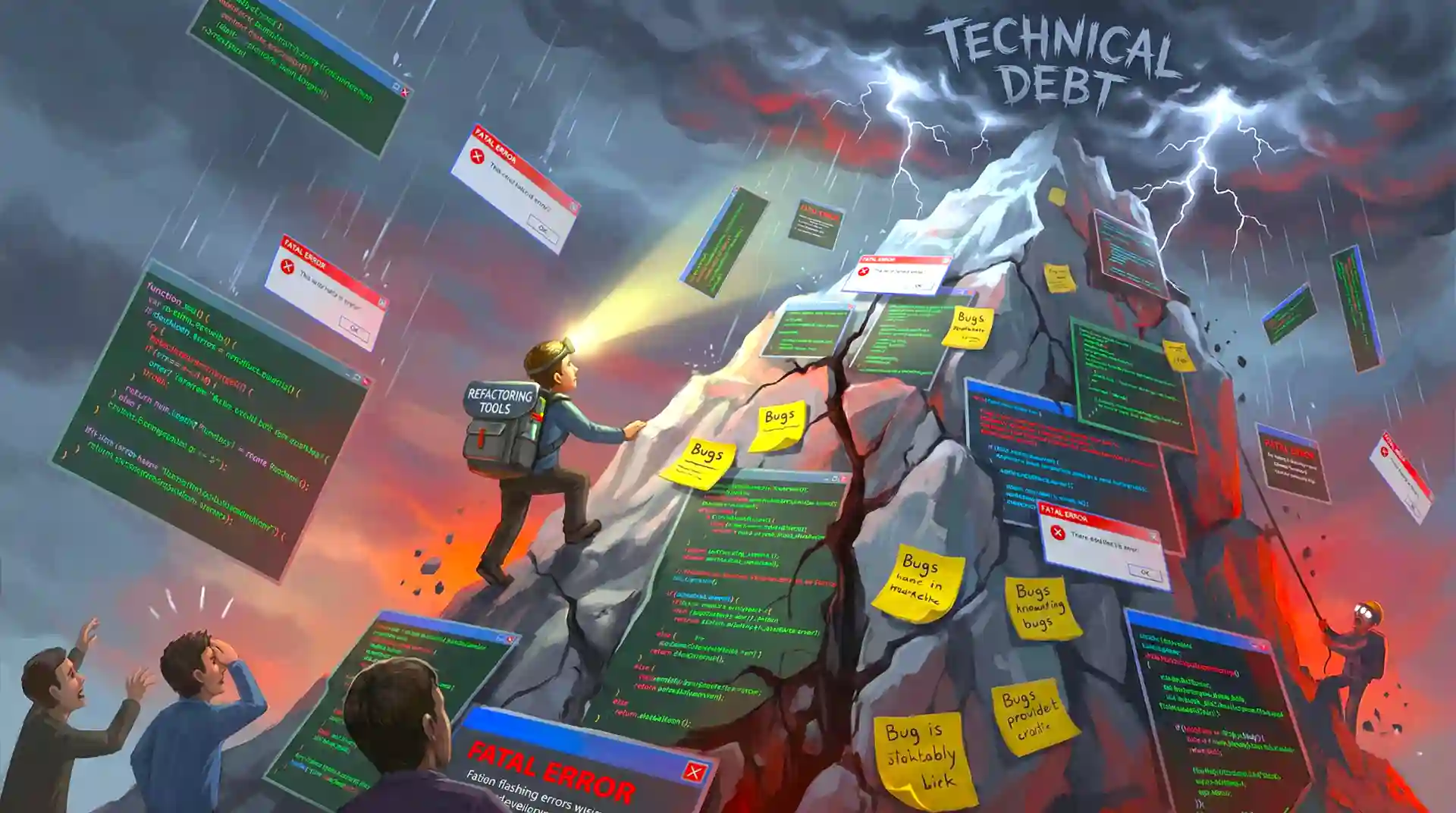
Vibe coding is when you write code based purely on intuition, momentum, and what "feels right" in the moment. It's coding by the seat of your pants. No planning, minimal documentation, loose structure, and a whole lot of "we'll figure it out later." According to Martin Fowler's definition of technical debt, this approach accumulates significant maintenance burden over time.
Think of it like jamming with a guitar. You're improvising, going with the flow, seeing where the music takes you. It's creative, it's spontaneous, and when it works, it's pure magic.
The Characteristics
Vibe coding usually looks like this:
- Files everywhere - You've got components scattered across your project with no clear organization. There's a
utilsfolder that's basically a junk drawer of random functions. - Naming that makes sense only to you - Variables like
data2,tempThing,handleStuff. Six months from now, you'll have no idea whatprocessTheThingWithStuff()actually does. - Copy-paste heaven - Why refactor when you can copy that working code and tweak it slightly? You've now got the same logic in five different places, but hey, it works!
- Comments are for wimps - The code explains itself, right? (Spoiler: it doesn't.)
- Testing is optional - Manual testing in the browser counts as testing, doesn't it?
- "It works on my machine" - And that's all that matters... until it doesn't work anywhere else.
Why It Feels So Good

Here's the honest truth: vibe coding feels incredible. It's like being in a creative flow state. You're solving problems left and right, the dopamine is pumping, and you're seeing results immediately. You feel productive. You feel smart. You feel unstoppable.
It's the coding equivalent of writing a novel without an outline. Some famous authors do it. It can work. But for every Stephen King who can pull it off, there are thousands of abandoned manuscripts gathering digital dust.
What Is Software Engineering? (The "Boring" Stuff)
The Real Definition
Software engineering is the systematic application of engineering principles to software development. In plain English? It's treating code like you're building a bridge that thousands of people will walk across every day. The IEEE Software Engineering Body of Knowledge (SWEBOK) provides comprehensive guidelines on these practices.
It means planning before you code. Writing tests. Creating documentation. Following patterns that have been proven to work. Making decisions that might slow you down today but will speed you up dramatically tomorrow.
The Characteristics
Real engineering looks different:
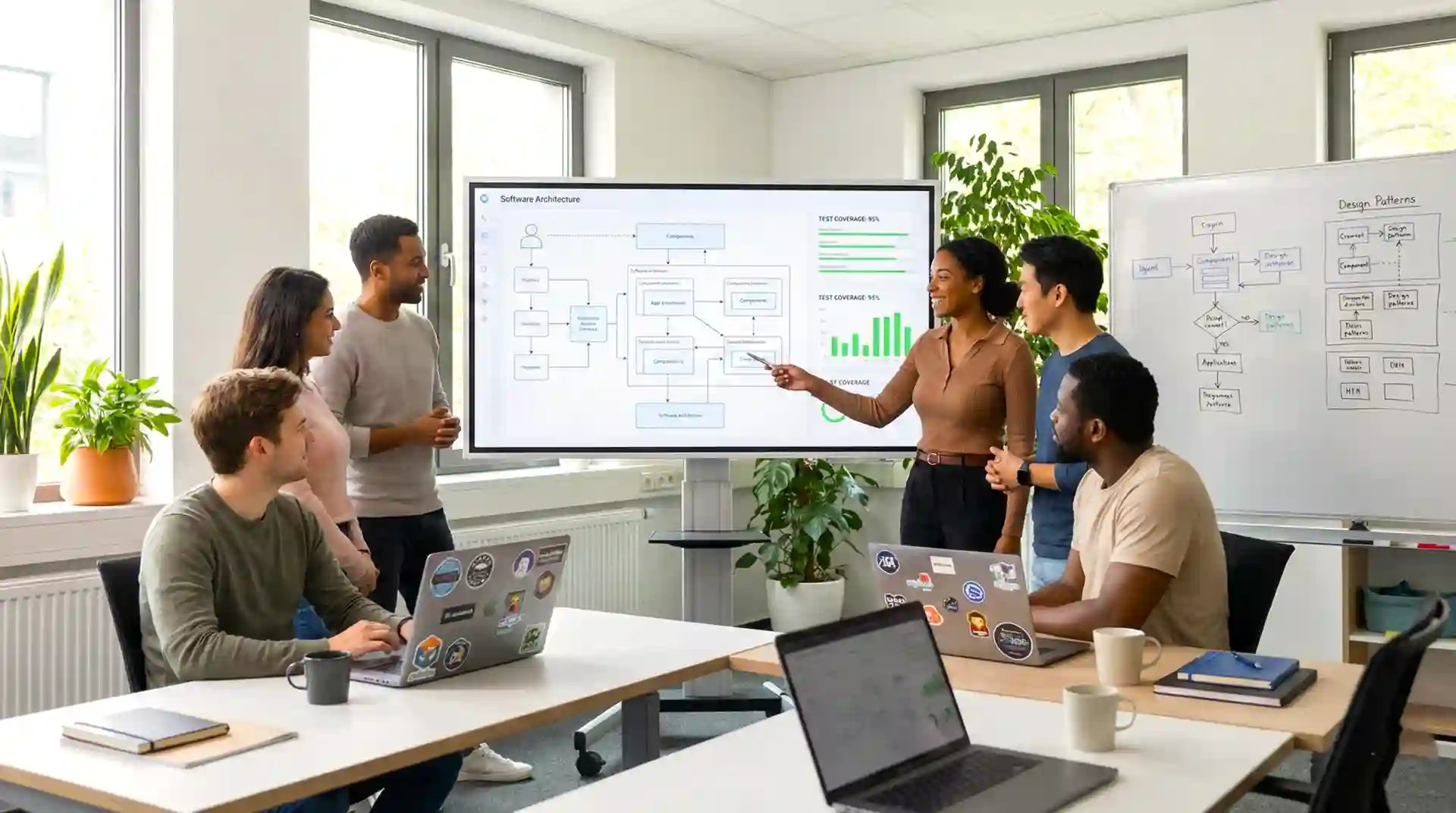
- Thoughtful architecture - Before writing a single line, you think about how the pieces fit together. You draw diagrams. You consider different approaches.
- Clear naming conventions - Every variable, function, and file name tells you exactly what it does.
calculateUserAgeFromBirthdate()beatsgetAge()which absolutely destroysgetData2(). - DRY principles - Don't Repeat Yourself. If you're writing the same logic twice, you're doing it wrong. Learn more about the DRY principle and why it matters.
- Documentation that exists - README files that actually help. Comments that explain the "why" not just the "what." API docs that your teammates can actually use.
- Tests that catch bugs - Unit tests, integration tests, E2E tests. They feel like overhead until they save you from deploying a catastrophic bug at 5 PM on Friday.
- Code reviews - Other humans look at your code before it ships. They catch stuff you missed. They make you a better developer.
Why It Feels Slow (At First)
Engineering feels slow because it is slow. At first. You're spending time planning instead of coding. You're writing tests instead of features. You're refactoring when the code already works.
It's like meal prepping on Sunday instead of just grabbing fast food every day. It takes more time upfront. It's less immediately gratifying. But come Tuesday evening when you've got a healthy meal ready to go instead of cold pizza, you're pretty glad you did it.
Vibe Coding vs. Engineering: Side-by-Side Comparison
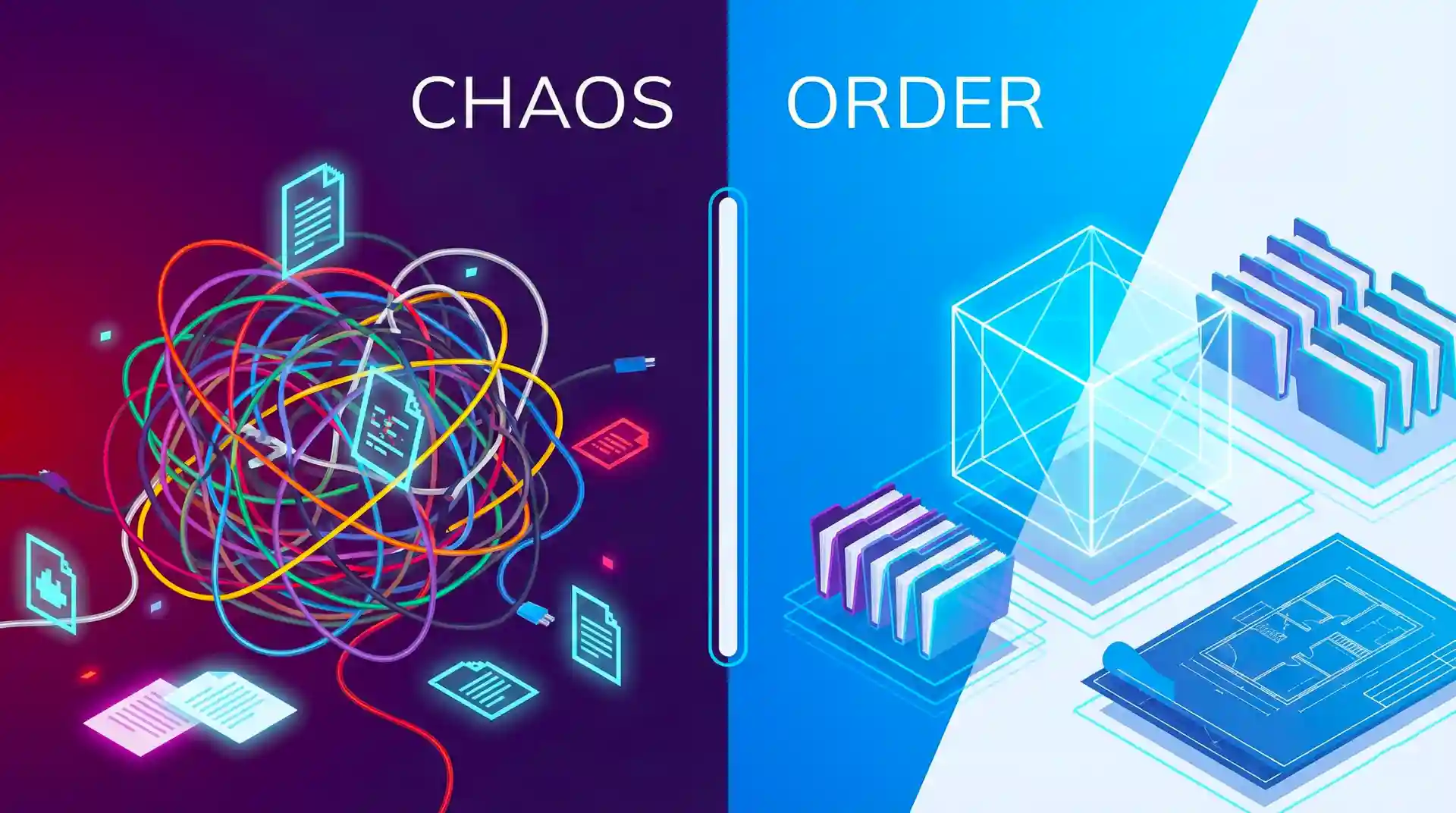
Here's a comprehensive breakdown of how these two approaches differ across key dimensions:
The Critical Moment: When Vibe Coding Breaks Down
The Solo Developer Phase
When you're working alone on a small project, vibe coding can actually work pretty well. You know where everything is because you wrote it all. You understand the weird naming because it made sense to you yesterday. You can keep the whole system in your head.
This is why so many developers fall into the vibe coding trap. It works! Until suddenly, it doesn't.
The Scaling Triggers
Here's where vibe coding falls apart:
Trigger 1: Time Passes
Come back to your vibe-coded project after three months. Suddenly, you're looking at your own code like it's written in ancient hieroglyphics. Why did you name that variable x? What does this function actually do? Where's the bug coming from?
I once reviewed my own code from six months earlier and literally couldn't figure out what past-me was thinking. I had to rewrite the whole thing because understanding it would have taken longer.
Trigger 2: The Project Grows
What started as a simple script is now a 50-file application. Your clever shortcuts are now causing weird bugs in unexpected places. That global variable you used? It's being modified in seven different places and you have no idea which one is breaking things.
Trigger 3: Another Developer Joins
This is the big one. You bring someone else onto the project, and suddenly you're spending more time explaining your code than you would have spent documenting it properly. They make changes that break stuff because they don't understand the unspoken rules you've been following.
I've literally heard developers say "Don't touch that file, it's cursed" because nobody understands it anymore.
Trigger 4: Production Issues
Something breaks in production. Users are affected. You need to fix it NOW. But you can't figure out where the bug is because there are no logs, no error handling, and the code structure is a maze. This is when vibe coding stops being fun and starts being a nightmare.
Real-World Horror Stories
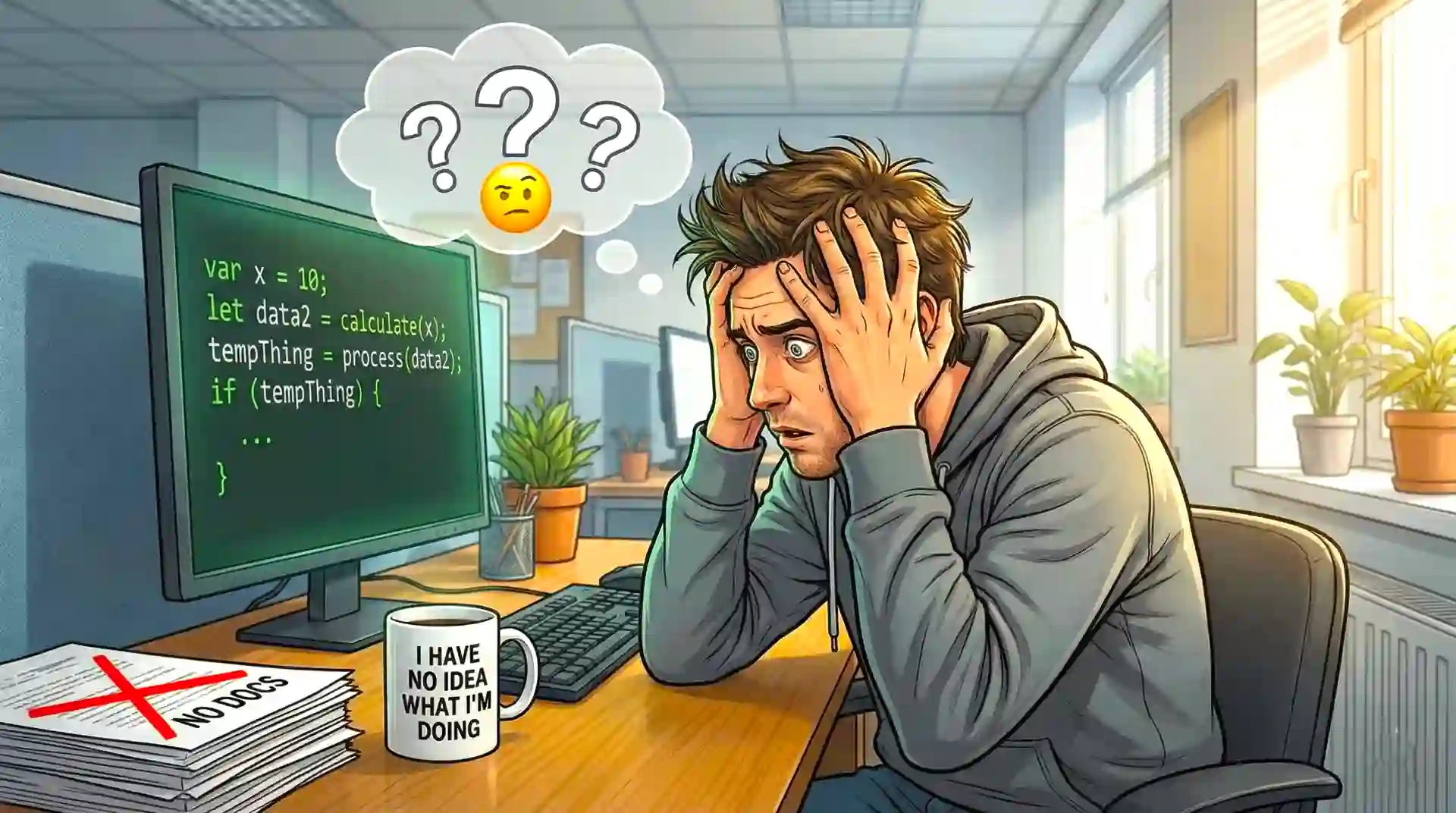
The Startup That Couldn't Onboard: I know a startup that built their entire MVP through vibe coding. They got users, raised money, and needed to hire developers. Except every new developer took three months to become productive because understanding the codebase was like learning a new language. They eventually had to do a complete rewrite.
The "Quick Fix" That Became a Week: A friend had to fix "a small bug" in a vibe-coded project. The fix should have taken an hour. Instead, it took a week because he had to trace through spaghetti code with no documentation, no tests, and functions that did three different things depending on random conditions.
The Solo Project That Became a Team Project: A developer built an internal tool by himself using pure vibe energy. It worked great. Then the company decided to make it a core product. They brought in a team. Progress ground to a halt because nobody could understand the original codebase. They rewrote it from scratch, which took three times longer than if they'd done it right initially.
When Vibe Coding Actually Makes Sense
The Prototyping Exception
Okay, real talk: there are times when vibe coding is actually the right choice.
If you're building a prototype to test an idea, absolutely go wild. Vibe code the hell out of it. Speed is everything. Just understand that if the prototype succeeds, you'll need to rebuild it properly.
Think of it like sketching before you paint. The sketch is rough and messy, and that's fine. But you're not going to hang the sketch in a museum.
The Hackathon Context
Hackathons are basically vibe coding competitions. You've got 24 hours to build something cool. Nobody expects production-quality code. Ship fast, win prizes, then throw the code away.
The Learning Phase
When you're learning a new language or framework, vibe coding is totally fine. Play around. Break stuff. Figure out how things work. This is experimentation, not production software. Sites like Codecademy and freeCodeCamp are great for structured learning when you're ready.
The Key Difference
The critical thing is knowing when you're vibe coding and when you need to engineer. The mistake is vibe coding when you're building something that actually matters and then being surprised when it falls apart.
The Engineering Mindset: Practical Practices
Start With Planning
Before you write code, spend 30 minutes planning. What are you building? What are the main components? How will they interact? Draw a diagram. Write some pseudocode.
This feels like wasted time. It's not. I promise you'll make up that 30 minutes in the first hour of coding because you won't be constantly backtracking and rewriting.
Write Tests (Yes, Really)
I know, I know. Tests are boring. They take time. But here's what tests actually do: They give you confidence. They let you refactor without fear. They catch bugs before users do. They document how your code is supposed to work.
Start small. Write a test for your most critical function. Then build from there. Tools like Jest for JavaScript or pytest for Python make this easier than ever.
Name Things Properly
Good naming is 50% of good code. If you can't think of a good name for a function, that's a sign the function is doing too much.
Instead of handleClick(), try handleLoginButtonClick(). Instead of data, try userProfileData. Your future self will thank you.
Document the Why, Not the What
Don't write comments that say // loop through array. Write comments that say // We iterate in reverse because older items have priority in our business logic.
The code shows what you're doing. Comments should explain why.
Use Consistent Patterns
Pick a folder structure and stick with it. Choose a naming convention and use it everywhere. Consistency makes code predictable, and predictable code is maintainable code. Resources like Google's Style Guides can help establish standards.
Build in Observability
Add logging. Add error tracking. Add monitoring. When something breaks, you need to know what happened. Vibe-coded apps are black boxes. Engineered apps tell you what's wrong.
Get Code Reviews
Even if you're a solo developer, get someone to review your code. Post it in a Discord. Show it to a friend. Fresh eyes catch things you'll miss. Platforms like GitHub make code review workflows seamless.
Finding the Balance: Pragmatic Engineering
The Reality Check
Here's the thing: you don't need to engineer everything to death. There's a middle ground between chaos and over-engineering.
Not every project needs a microservices architecture. Not every function needs ten tests. Not every line needs a comment.
The art is knowing what's important.
The Risk Assessment Framework
Ask yourself:
- How long will this code live?
- How many people will work on it?
- What happens if it breaks?
- How likely is it to change?
A quick script that runs once? Vibe away. A payment processing system? Engineer that thing like your job depends on it (because it does).
The 80/20 Rule
Focus your engineering effort on the 20% of code that will cause 80% of your problems. Core business logic? Test it thoroughly. A one-off data migration script? Maybe don't spend a day writing tests for it.
The Iterative Approach
You don't have to get everything perfect on the first try. Start with a decent structure, then improve as you go. Refactor when you have good reason to, not just because the code isn't "perfect."
Building Better Habits
Start Your Day With a Plan
Before you start coding, write down what you're building and how you'll do it. Even if it's just a few bullet points. This five-minute habit will save you hours of confused meandering.
Use Linters and Formatters
Set up ESLint, Prettier, or whatever tools exist for your language. Let them enforce consistency so you don't have to think about it.
Learn Design Patterns
You don't need to memorize every pattern, but understanding common ones will give you a vocabulary for solving problems. When you recognize "oh, this is a factory pattern situation," you'll know how to structure your code. The classic Refactoring Guru is an excellent resource.
Read Other People's Code
Look at well-maintained open-source projects. See how they structure things. Notice their naming conventions. Learn from people who are better than you.
Practice Explaining Your Code
If you can't explain what your code does in plain English, that's a red flag. Practice talking through your code. This will make you write clearer code.
The Long-Term Payoff
Velocity That Actually Increases
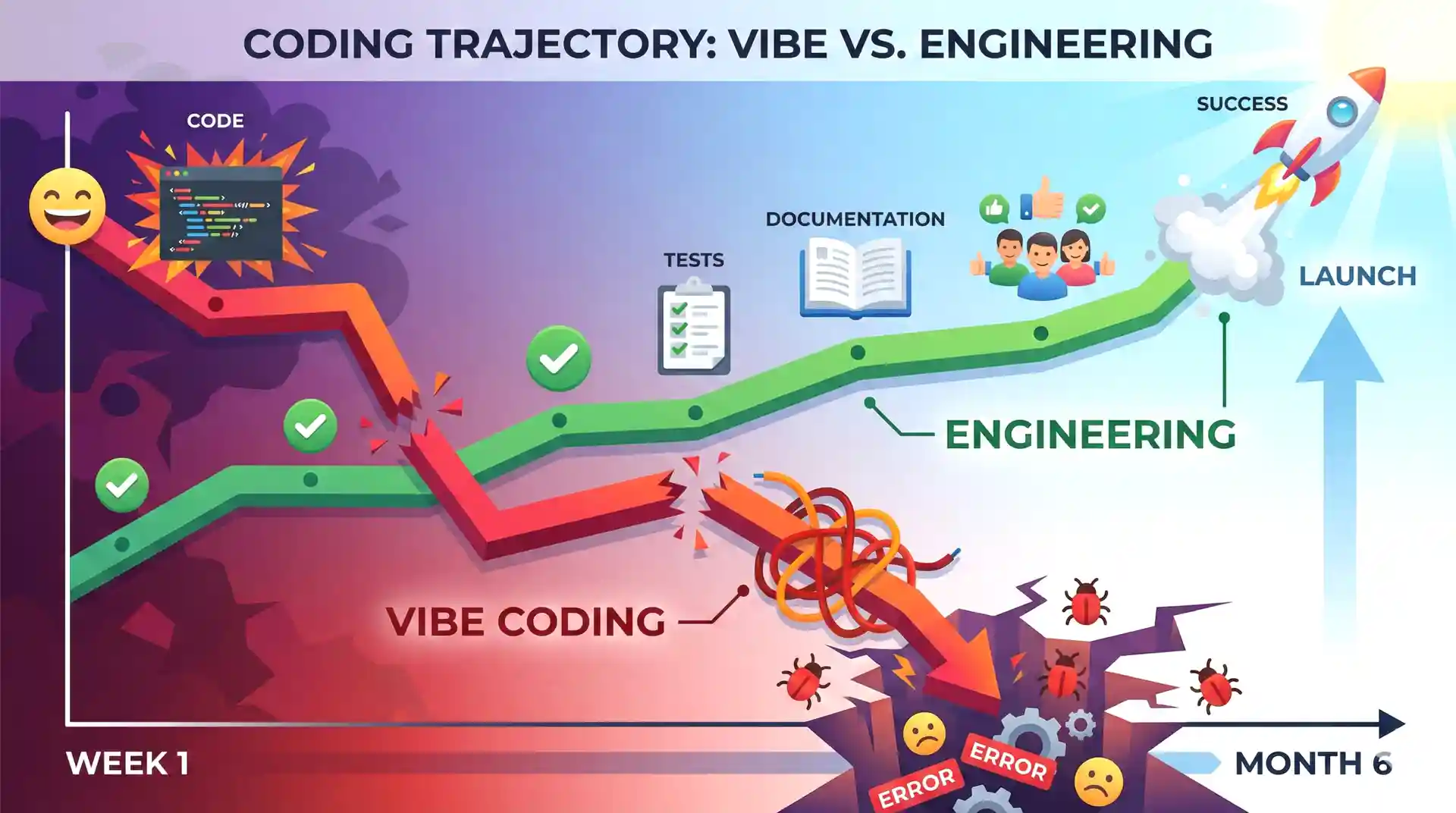
With proper engineering, here's what happens: your first feature might take a bit longer. But your tenth feature will be faster than your first. Your hundredth feature will be faster still.
With vibe coding, it's the opposite. Each feature gets harder because the mess keeps growing.
The Joy of Maintenance
I know "joy of maintenance" sounds like an oxymoron, but hear me out. Coming back to well-engineered code, even code you wrote years ago, and being able to understand it immediately? That's satisfying.
Making a change and having tests confirm you didn't break anything? That's confidence.
Seeing a bug report and knowing exactly where to look? That's the payoff.
Career Growth
Developers who can build scalable, maintainable systems are valuable. Really valuable. Companies will pay top dollar for someone who can not just make things work, but make them work reliably and sustainably.
Vibe coders hit a ceiling. Engineers keep growing.
Building Things That Last
At the end of the day, don't you want to build things that last? Projects you can be proud of? Code that other developers actually enjoy working on?
That doesn't happen by accident. It happens through intentional engineering practices.
Conclusion: Choose Deliberately
Look, I'm not here to shame anyone for vibe coding. We've all done it. Sometimes we still do it. The key is being honest about what you're doing and why.
If you're experimenting, prototype away, go fast, break things. But if you're building something that matters, something that will grow, something other people will use and maintain, take the time to engineer it properly.
The difference between vibe coding and engineering isn't about being smart or dumb. It's about being strategic. It's about understanding the trade-offs and making conscious choices instead of just going with the flow.
Your code is going to outlive the moment you write it. It's going to be read more times than it's written. It's going to be maintained by people who aren't you (including future-you, who might as well be a different person).
So ask yourself: am I building this for right now, or am I building this to last?
The answer will tell you whether to vibe or to engineer.
And honestly? Once you get good at engineering, you'll find that the vibe changes. The flow state doesn't go away. You just learn to channel it into something sustainable. You learn to feel good about code that's not just clever, but maintainable. Not just fast to write, but fast to change.
That's when you level up from coder to engineer. And trust me, it's worth it.
Now go write some code that won't make you cry six months from now. Your future self is counting on you.
Continue Learning
Ready to improve your development workflow? Check out our Complete Guide to Script Formatting for structured approaches to content creation, or explore our Tutorials section for more hands-on guides.